
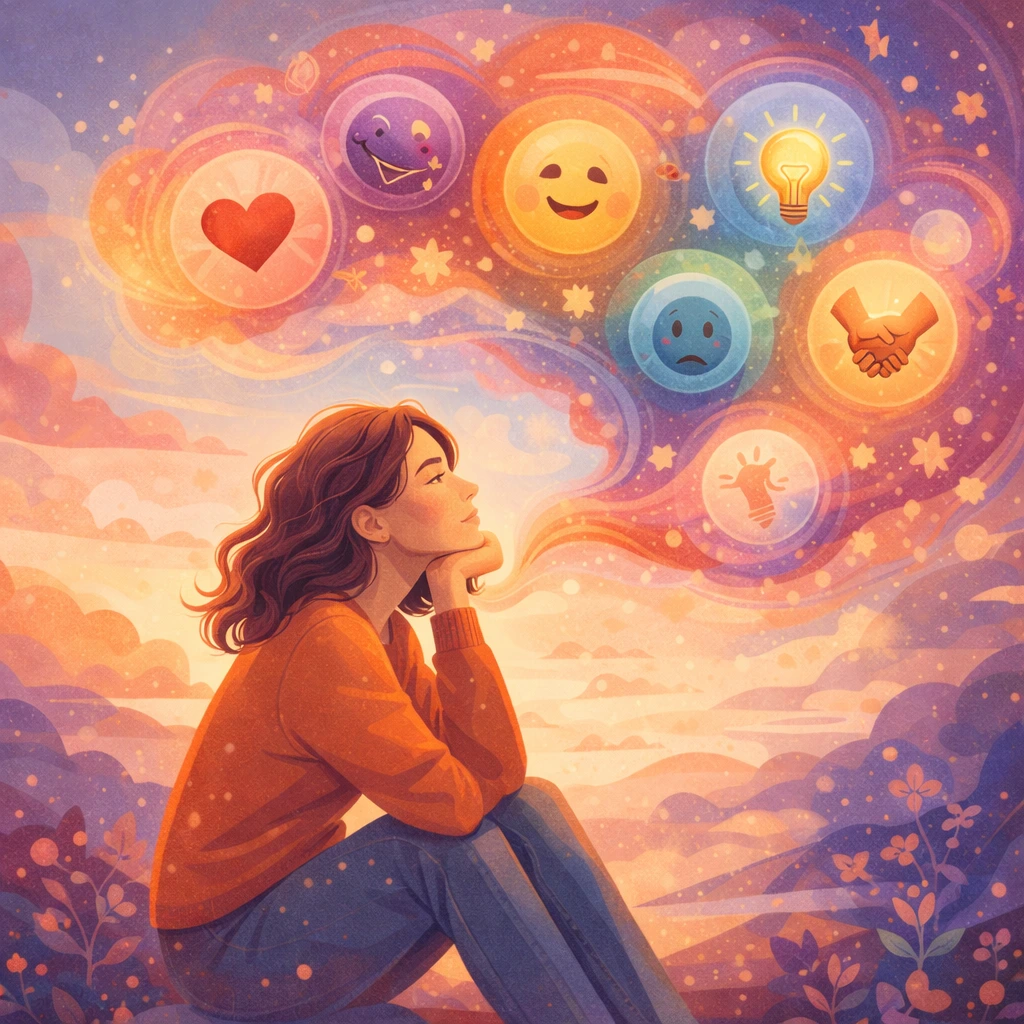
How Our Emotions Shape Our Lives
Have you ever wondered why certain situations make you feel a particular way?
Why a simple conversation can brighten your day, while another can leave you thinking about it for hours? Why some experiences fill you with confidence while others make you hesitant?
Much of it comes down to our emotions — and the experiences that shaped them.
Emotions quietly influence the way we move through life. They affect how we interpret situations, how we respond to people, and how we remember moments. Often, we do not notice their influence. Yet they are constantly guiding our reactions, decisions, and even our expectations of the future.
But emotions do not exist in isolation. They are deeply connected to the experiences we have lived.
Experiences Leave Emotional Imprints
Every experience we go through leaves behind a subtle emotional mark.
It might be a small moment — a conversation, a challenge, a success, or even a disappointment. In that moment, we feel something: joy, frustration, pride, fear, excitement, or relief.
Over time, these moments begin to build a quiet emotional memory inside us.
Our mind remembers how something felt. When we encounter similar situations again, those earlier emotions can resurface. Sometimes they help us feel confident and prepared. Other times they may make us cautious or uncertain.
In many ways, our experiences teach our emotions how to respond.
The Power of First Experiences
First experiences are especially powerful.
When we encounter something for the first time, our mind has no reference point yet. The way we interpret that moment — and the emotion we feel — often becomes the foundation for how we approach similar situations later.
A first experience can shape how we see things for years to come.
A supportive teacher might inspire confidence in learning.
A difficult presentation might create hesitation around public speaking.
A positive relationship might shape how we understand trust.
The experience itself is only one part of the story. The meaning we attach to it — and the emotion we carry from it — often stays with us longer.
Later in life, when we face similar situations, those emotions can quietly return.
We Also Learn Emotions From Others
Not all of our emotional responses come purely from our own experiences.
Many are learned simply by observing the people around us.
As children, we watch how our families respond to challenges, disagreements, happiness, and stress. Without realizing it, we begin to adopt similar patterns. If people around us respond calmly to difficulties, we may learn to approach problems in the same way. If reactions are intense or fearful, we may unconsciously mirror those responses as well.
Friends and communities continue to shape this emotional learning as we grow.
And today, social media has become another powerful influence.
Through social platforms, we constantly see how others present their emotions — what they celebrate, what they react to, what they consider success, and what they consider failure. While these perspectives can be inspiring, they can also quietly influence how we think we should feel or respond.
Sometimes we adopt emotional reactions simply because we have seen them repeated so often.
Recognizing this can be surprisingly freeing. It reminds us that not every emotional response is purely our own — many are patterns we have absorbed along the way.
When Old Emotions Return
Life often brings us back to similar situations in different forms.
A conversation may remind us of something from the past.
A challenge at work may echo a difficulty we once faced at school.
A new opportunity may feel exciting — or intimidating — depending on our earlier experiences.
When this happens, the emotions connected to those earlier moments often return with them.
This is not a flaw in how we think. It is simply how the mind learns.
The challenge is that sometimes those emotional responses may no longer serve us in the present moment. A single past experience can shape our expectations long after the situation itself has changed.
This is where awareness becomes important.
Awareness Creates Space
When we begin to notice our emotions rather than simply react to them, something shifts.
Instead of automatically repeating the same emotional patterns, we gain a moment of space — a chance to observe what we are feeling and where it might be coming from.
We might ask ourselves:
Why am I feeling this way right now?
Does this remind me of something from the past?
Is this reaction helping me in this moment?
These questions do not remove emotions. Instead, they help us understand them.
And understanding often softens the intensity of a reaction.
Turning Experiences Into Meaning
Every experience carries something we can learn from.
Even difficult moments can offer insight into how we respond to challenges, how we interpret situations, and what truly matters to us.
When we reflect on our experiences rather than simply moving past them, we begin to see patterns more clearly. We notice what triggers certain emotions and what helps us feel more balanced.
Over time, this awareness allows us to reshape how we respond.
A moment that once felt overwhelming may become manageable.
A situation that once created hesitation may become an opportunity for growth.
The experience itself may not change, but our relationship with it can.
Becoming More Aware of Ourselves
Emotional awareness is not about controlling every feeling we have.
It is about understanding our inner responses — recognizing how our experiences, observations, and memories influence the way we feel.
When we pause to reflect, we begin to notice the connections between past and present. We see how our emotional patterns formed, and we gain the opportunity to respond more thoughtfully in the future.
Over time, this awareness can change how we move through life.
Instead of being carried entirely by past reactions, we begin to create new experiences with greater clarity and intention.
And sometimes, that simple act of pausing — even briefly — can be the first step toward understanding ourselves a little better.
At My Fyrst, this pause becomes a small daily practice: a space to reflect on experiences, notice emotional patterns, and better understand the inner world that shapes how we live, think, and grow.
Because when we begin to understand our emotions, we begin to understand ourselves.