
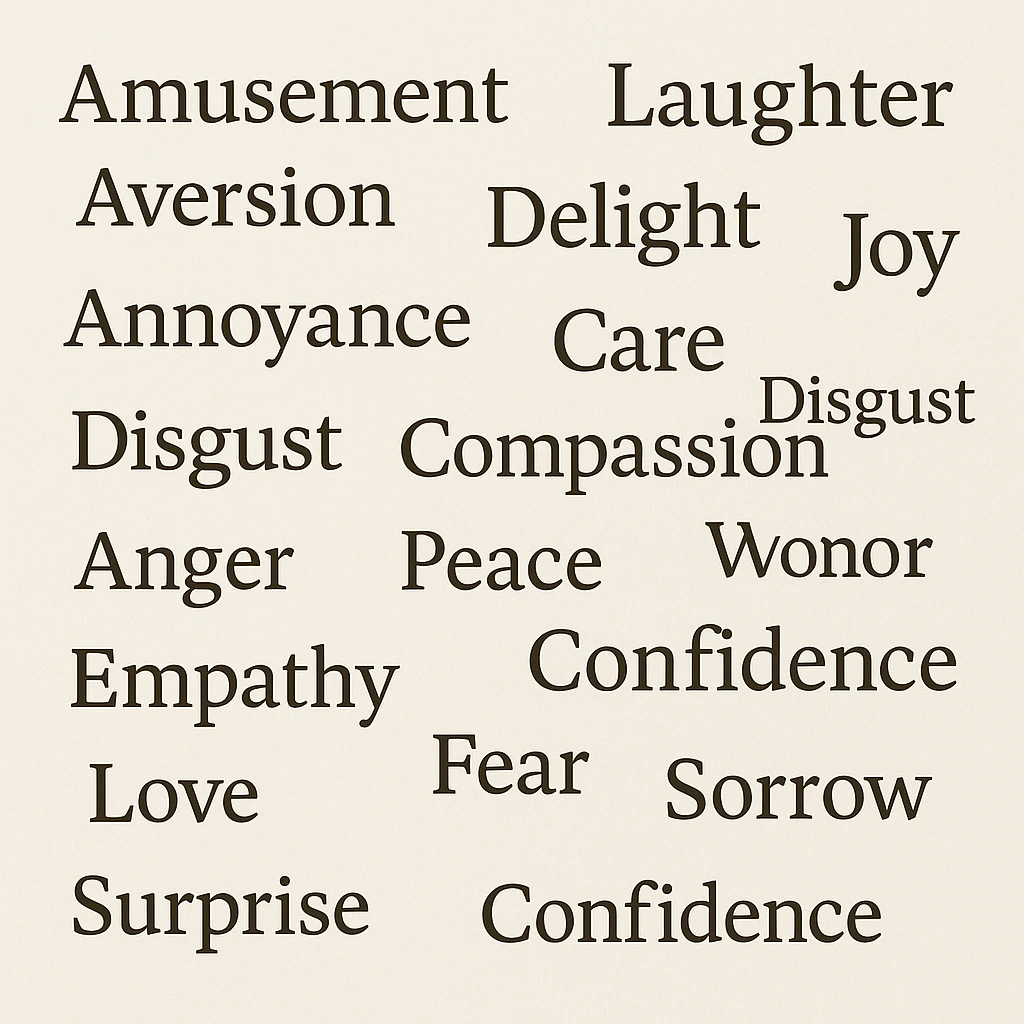
Recognize Emotions Through the Navarasas: A Simple Guide to Understanding Your Feelings
Recognizing emotions isn’t always easy — sometimes what we feel is complex, mixed, or hard to name. The ancient concept of the Navarasas offers a beautiful and practical way to recognize emotions by grouping them into nine emotional families. Understanding these categories can help you identify what you’re feeling and why, making emotional awareness gentler and more intuitive.
Why the Navarasas Help You Recognize Emotions
The Navarasas describe nine core emotional states that appear in every human experience. When you place your feelings into these categories, you begin to recognize emotions more clearly and see the patterns behind your reactions.
Below is a simple, relatable explanation of each rasa and the feelings that belong to it.
1. Śṛṅgāra — Love & Connection (Helps You Recognize Emotions of Affection)
This rasa represents warmth, intimacy, admiration, and closeness.
You experience Śṛṅgāra when you feel connected, cared for, or emotionally open.
2. Hāsya — Joy & Lightness (Helps You Recognize Emotions of Happiness)
This is the rasa of smiles, laughter, and relief.
Any moment that feels playful or uplifting fits here.
3. Karuṇā — Compassion & Sorrow (Helps You Recognize Emotions of Sadness)
Soft sadness, vulnerability, empathy, and heaviness all belong to Karuṇā.
It appears when your heart feels tender.
4. Raudra — Anger & Intensity (Helps You Recognize Emotions of Frustration)
Anger, irritation, and resentment all fall into this emotional family.
You feel Raudra when something feels unfair or overwhelming.
5. Vīra — Courage & Confidence (Helps You Recognize Emotions of Strength)
Confidence, willpower, bravery, and determination live here.
Whenever you take a step forward despite fear, you feel Vīra.
6. Bhayānaka — Fear & Anxiety (Helps You Recognize Emotions of Worry)
This rasa includes dread, insecurity, nervousness, and mental overwhelm.
It appears in moments of uncertainty or self-doubt.
7. Bībhatsa — Disgust & Aversion (Helps You Recognize Emotions of Discomfort)
Avoidance, dislike, moral disgust, and emotional withdrawal belong here.
You feel Bībhatsa when something feels “off.”
8. Adbhuta — Wonder & Curiosity (Helps You Recognize Emotions of Surprise)
Awe, fascination, inspiration, and childlike curiosity live in this rasa.
It shows up when something expands your perspective.
9. Śānta — Peace & Tranquility (Helps You Recognize Emotions of Calm)
Calm, contentment, stillness, balance, and inner harmony are part of Śānta.
It’s the feeling of being grounded and fully present.
How to Use the Navarasas to Recognize Your Emotions Daily
Try this simple MyFyrst-style routine:
Step 1 — Notice the feeling
Pause for a moment and observe what’s happening inside.
Step 2 — Match it to a rasa
Ask yourself: Which emotional family does this belong to?
Step 3 — Reflect gently
“What is this emotion trying to tell me?”
This practice helps you recognize emotions with clarity and compassion — not judgment.
The Navarasas don’t simplify emotions — they help you see them more clearly.
And when you can recognize emotions more easily, you can respond to them with understanding, balance, and inner strength.
know more about Navarasa – https://www.britannica.com/art/rasa
check out My Fyrst – know how it works