
The things we keep
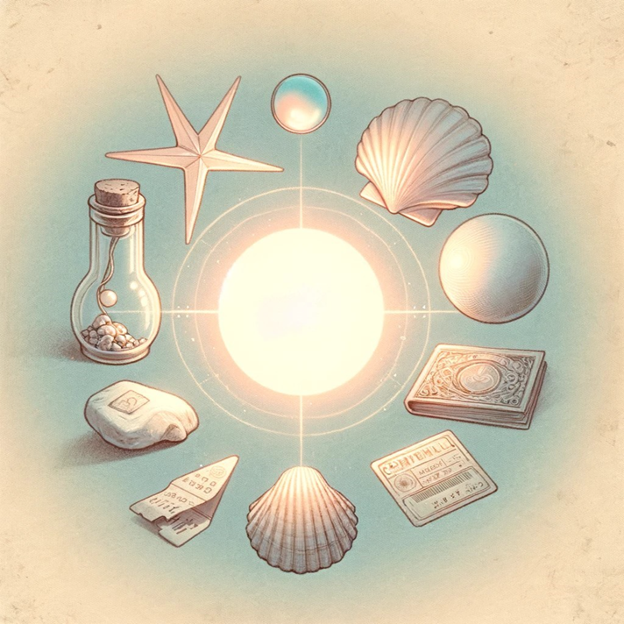
There is a particular kind of quiet that comes when you hold something that has been with you for a long time. A watch that belonged to someone you loved. A ticket stub from a night you still think about. A small stone picked up on a beach during a summer that changed things. You may not look at these objects often. But you have kept them. And that keeping — quiet, almost unconscious — says something.
We do not talk much about the things we hold onto. We talk about decluttering, about letting go, about travelling light. But most of us have a drawer, a shelf, a box somewhere that we would not give up easily. Inside it are objects that have no practical use and considerable emotional weight. Understanding why we keep them, and what happens when we actually pay attention to them, turns out to be more interesting than it might first appear.
What nostalgia actually does
The word nostalgia has had a complicated history. It was once classified as a medical condition — a form of homesickness so severe it was considered dangerous. For much of the twentieth century it was viewed with suspicion, associated with sentimentality, avoidance, or an unhealthy fixation on the past.
The research has moved on considerably since then. Psychologists Constantine Sedikides and Tim Wildschut at the University of Southampton have spent decades studying nostalgia as a psychological state, and their findings are worth sitting with. Their research, published in Current Directions in Psychological Science, found that nostalgia — the kind triggered by a photograph, a song, or an object connected to meaningful experience — tends to increase feelings of social connectedness, strengthen a sense of who we are across time, and lift mood in ways that feel grounded rather than escapist.
What this suggests is that looking back is not always a way of avoiding the present. Sometimes it is a way of remembering what the present is built on.
The weight of small things
MIT researcher and sociologist Sherry Turkle spent years collecting stories about the objects people keep and what those objects mean to them. In her work Evocative Objects, she observed that the things we hold onto are rarely valuable in any conventional sense. What they hold is relational — they are stand-ins for people, places, experiences, and versions of ourselves that we do not want to lose entirely.
There is something quietly profound in this. The objects we keep are, in a sense, a physical record of what mattered to us. Not what we said mattered, or what we thought should matter — but what actually left a mark. A child’s drawing kept for twenty years. A handwritten note from someone no longer here. A small gift from a trip taken alone that turned out to mean more than expected.
These things do not just remind us of the past. They remind us of ourselves.
Why paying attention changes things
Most of us pass our cherished objects without really seeing them. They become part of the furniture of a life — present, familiar, unexamined. The act of deliberately picking something up, feeling its weight, and letting its story return is a different thing entirely. It is a form of attention that most of us rarely give to anything, let alone to the quieter corners of our own history.
What tends to happen in that attention is not always what we expect. Sometimes warmth arrives easily. Sometimes what surfaces is more complex — a thread of grief woven through the good memory, or a realisation about how much has changed. This mix is worth noticing. Emotions rarely arrive in neat categories. The things we love most are often also the things that carry the most layers.
My Fyrst draws from a framework rooted in ancient Indian philosophy that recognises nine distinct emotional states — each one considered a signal, a piece of information about our inner life rather than a reaction to be managed. When we hold something cherished, what surfaces might be Śṛṅgāra — the warmth of love and connection — or Karuṇā, a gentle sorrow for what has passed, or something that sits between the two with no clean name. The framework does not ask us to label the feeling precisely. It asks us to notice that something is there.
A question worth carrying
The next time you pass the object you have kept longest — without planning to look at it, without a reason — consider picking it up for just a moment. Not to analyse it. Not to decide whether to keep it or let it go. Just to notice what it brings with it.
The things we carry say something about who we are. Sometimes the most honest self-knowledge does not come from sitting down to reflect. It comes from paying attention to what we have quietly, persistently, chosen not to forget.
My Fyrst is a personal practice, not therapy or clinical support. If you are going through a difficult time, please speak with a qualified mental health professional.